Outdoor Dining at Sunset: How to Pick a Table with the Best Light and Least Wind
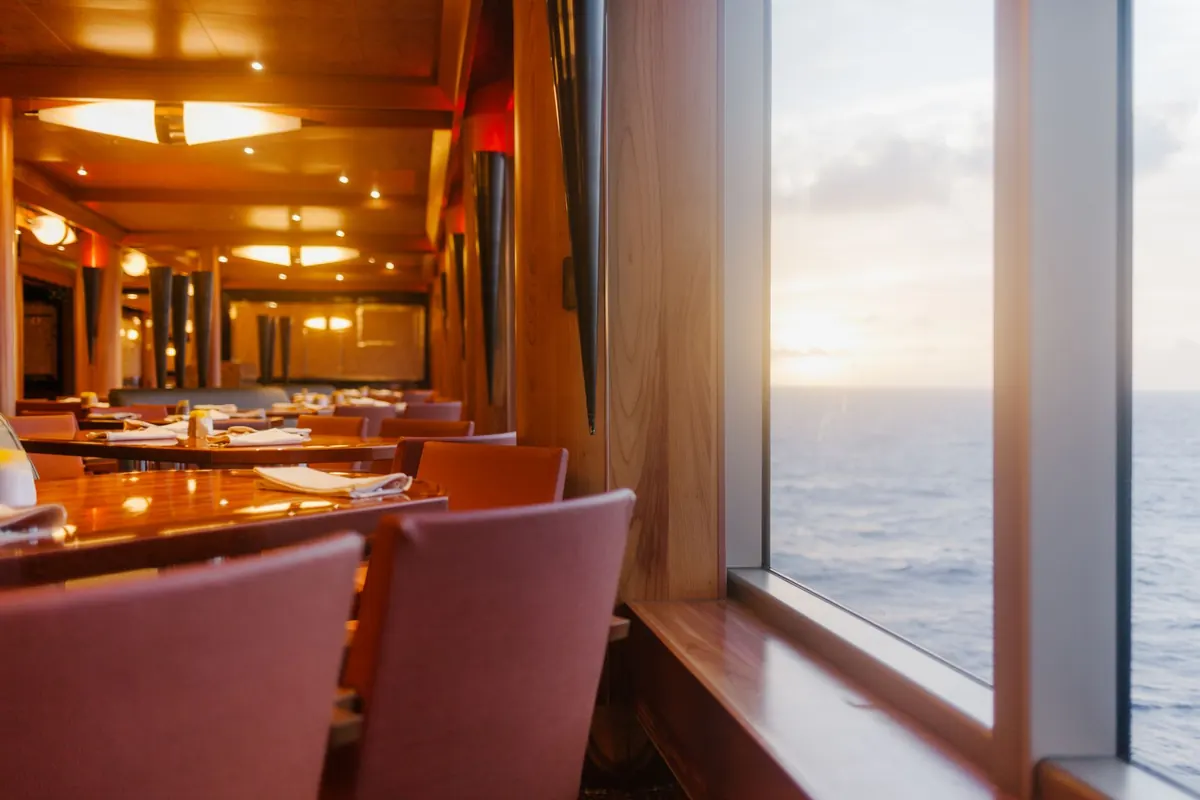
The sun is still a hand's width above the water when the host leads you to a table. You sit, open the menu, and discover what the photographs left out: the light is straight in your eyes, the wind has taken one corner of the tablecloth, and the view — the reason you booked — sits somewhere behind your left shoulder. Twenty minutes later the terrace is full and every better table is taken.
Choosing well at sunset is not luck, and it does not require a floor plan. It takes about ninety seconds of looking before you accept the seat, in a fixed order: where the sun will be in half an hour, where the wind comes from, what stands between you and the kitchen door, and how the view sits once you are seated rather than standing. Get those four things right and the meal takes care of itself.
Start with the Sun, Not the View
Most people scan a terrace for the best panorama and sit down facing it. That is usually the first mistake, because the best panorama is often due west, and due west at seven in the evening is a low sun aimed directly at your eyes.
Look at the floor before you look at the horizon. The shadow line creeping across the tiles tells you exactly where the light will be in twenty minutes. The sun drops roughly fifteen degrees every hour, which means a table that is pleasantly lit at 7:00 can be an outright glare problem by 7:40 — and a table in full shade at 7:00 may be the best seat in the house by 8:15.
Then check what the terrace actually faces. A west or southwest terrace gets the full show; an east-facing one loses the sun behind the rooftops long before the sky turns. If the sunset is the point of the evening, ask a straight question when you book: at what time does the sun leave this terrace? Staff answer that one honestly, because they watch it happen every day.
Angling Your Seat Against the Glare
The best position is rarely facing the sunset and rarely with your back to it. Sit side-on, with the light falling across your shoulder. You can turn your head to watch the sky, both diners can see each other's faces without squinting, and the menu stays readable — which matters more than it sounds once the candles come out.
With your back to the sun, the light lands on your food and your companion's face, which is flattering, but you will spend the last half hour of daylight turned away from the sky. Facing it directly is dramatic for four minutes and uncomfortable for forty.
Small adjustments that work
- Ask whether the chairs can be angled. On a round two-top they usually can; on a long communal table you are stuck in one direction.
- Take the seat at the edge of the shade rather than deep inside it — you get the warm light without the direct hit.
- If the terrace has a glass or mesh wind panel, sit just behind it: it cuts glare as well as breeze.
- Keep a brimmed hat or sunglasses within reach rather than in a bag under the table. You will want them for ten minutes, not all evening.
Shade That Works and Shade That Doesn't
Not all shade is equal. A solid canvas umbrella or a building's shadow gives you stable, even cover. A pergola with open slats gives you stripes of light that move across the table and, at the wrong angle, across your face — worse than full sun for anyone sensitive to glare. Adjustable louvres are the good version; fixed narrow slats are the version you should sit under only if you have no choice.
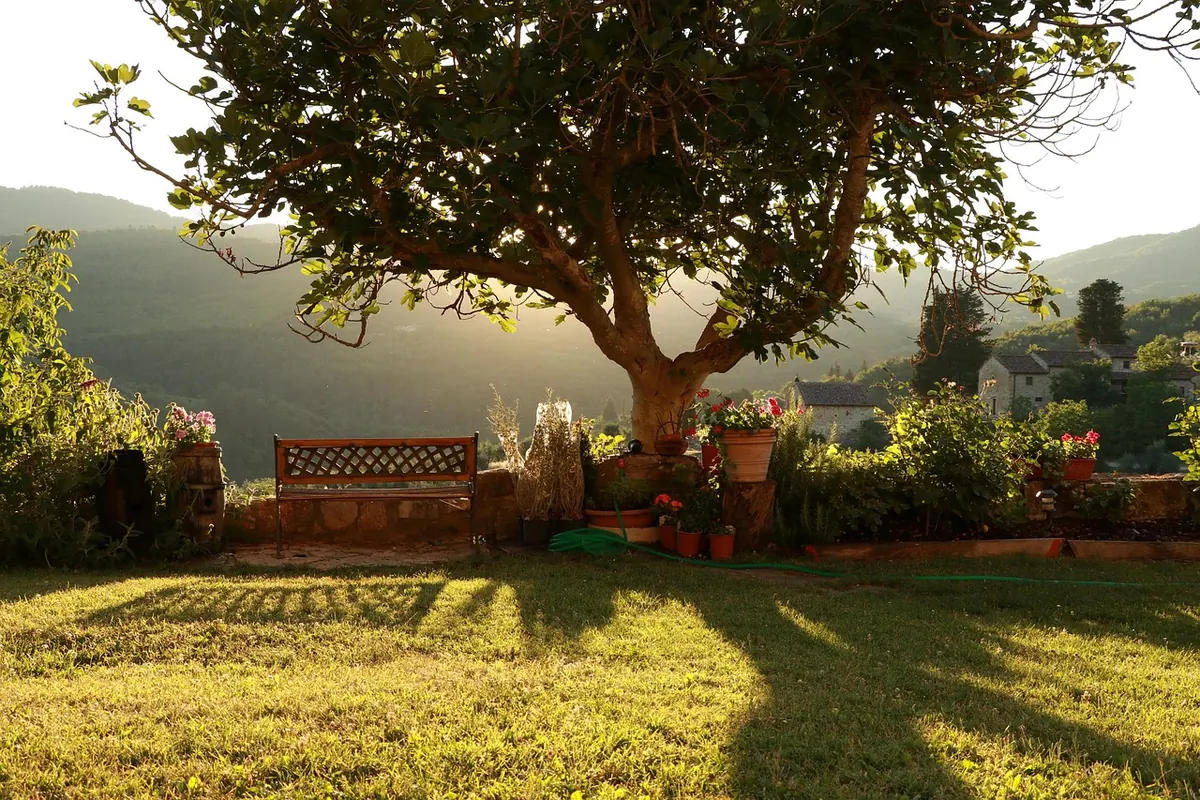
Trees are lovely and unpredictable. Leaf cover filters the light beautifully at 6:30 and then stops mattering entirely once the sun is low. It also drops things. If you are seated under one, sit slightly to the side of the trunk rather than directly beneath the canopy.
One more distinction worth making: early seatings and late seatings need opposite advice. Before about 7:30, shade is your friend. After the sun touches the horizon, the whole terrace is in soft light and what you actually want is shelter, warmth and an unobstructed line to the sky.
Wind: The Quiet Reason People Leave Early
Nobody remembers a windy dinner fondly. Wind lifts napkins, cools plates in ninety seconds and makes conversation an effort. It also tends to arrive exactly when the light gets good.
Read the room for these signs before you sit:
- Tablecloth corners snapping, or salt shakers and folded napkins already used as weights.
- Staff in jackets while guests are in shirtsleeves.
- Umbrellas closed or furled on an otherwise clear evening.
- Everyone seated with their back to one particular side of the terrace.
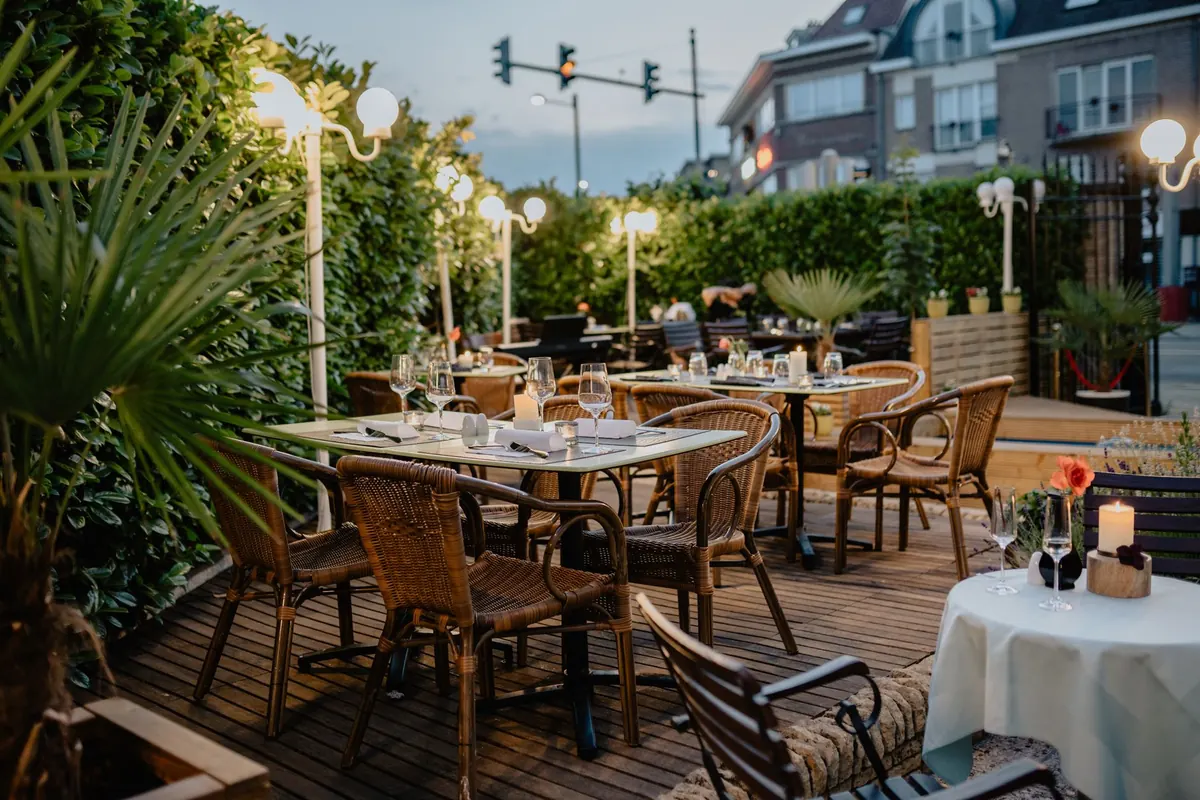
Then find the windbreaks: glass panels, planter boxes with tall grasses, half-walls, the return of the building. Sit on the sheltered side of them. Corners are usually calmer than open edges, with one exception — an alley or gap between two buildings can funnel a breeze straight through a corner table, so a corner that sits beside a passage is not the same as a corner that sits beside a wall.
Height matters too. Roof terraces and top-floor balconies catch more wind than a courtyard at street level, and a seafront terrace will usually have a steady onshore breeze that builds through the afternoon and eases only after the sun has gone. On those terraces, the second or third row back from the railing is noticeably calmer than the front row, and the view is barely different. Ask the staff which tables get the wind later; they know precisely, and they will often steer you away from the worst one if you ask before sitting.
Service Flow: Sit Where the Evening Moves
Watch a server for two minutes before you accept a table. Their route across the terrace becomes the rhythm of your evening, and a table parked on that route is a table that will be bumped, leaned over and hurried past all night.
Avoid the swinging kitchen door, the bar pass, the gap between the bar and the terrace, the host stand and any speaker mounted at head height. A table beside the entrance is not just noisy; it is the first thing every arriving guest sees, and you will be part of the doorway for two hours.
The counter-argument is the forgotten corner. Tables tucked far from the service loop can be wonderful and quiet, and also slow, because nobody walks past them by accident. If you take one, ask whether that section is staffed and where the server will be. Planters often mark a section boundary — sitting just behind one usually gets you calm without exile.
Comfortable Angles for Watching the Sky
A view is not a photograph. It has to be comfortable for an hour and a half from a seated position, and the two variables that decide this are railing height and distance.
A railing at chest height when you are standing is at eye level when you are sitting, and it will slice the horizon in half. You want either a low railing, a glass panel, or enough distance to see over it. Sitting two or three metres back from the edge usually gives a wider, calmer view than pressing up against it — you take in more sky, and you take less wind.
Check the neck angle, too. A terrace raised above the water invites you to look slightly down, which is easy to hold. A terrace below street level looking up at the horizon gives you sky and nothing else, and you will spend the evening craning. And test the chair: a wobbly leg on tile will annoy you long before dessert arrives.
The Ninety-Second Check Before You Sit
- Find the sun and estimate where it will be in twenty and forty minutes.
- Identify which side the breeze is coming from and which structure blocks it.
- Locate the kitchen door, the bar pass and the main server route.
- Sit down and look at the view from the chair, not from standing.
- Ask, briefly, if a better-placed table is free later — and whether it is worth waiting ten minutes for it.
Booking and Asking Well
The most useful thing you can do happens before you arrive. When you reserve, describe the table rather than naming a number: "second row from the railing, under the pergola, away from the bar door" is a request a host can actually act on. Arrive ten minutes early, when the terrace is half empty and moving you is easy, rather than at the rush. If the seat you are given is wrong, say so before you order — most places will move you without a fuss, and after the first course it becomes awkward for everyone.
Then bring a light layer, even in high summer. Terraces cool quickly once the sun goes, and the table you chose for its view is the table most exposed to the evening air. The best sunset table is rarely the closest to the edge or the most photographed. It is the one where the light falls across your shoulder, the wind never reaches your glass, and you can watch the sky without turning your back on the person across from you. That table exists on almost every terrace. You just have to look for it before you sit down.
Photo: Julia Volk / Pexels