Best Time to Arrive at a Sunset Terrace: A 90-Minute Planning Guide
The best sunset terraces are not busy at sunset. They are busy forty minutes before it, when every seat with a western view is taken and the queue at the bar has quietly doubled. If you have ever arrived at 7:40 for a 7:55 sunset and spent the whole show standing behind a potted olive tree, you already know the problem. The fix is not to arrive earlier in some vague way. It is to arrive ninety minutes before the sun touches the horizon, with a rough plan for each of those minutes. That margin covers the table, the drink, the slow gold, the drop itself and the blue hour afterwards, and it leaves no part of the evening rushed.
Start With the Sunset Time, Then Work Backwards
Sunset time is not a mood, it is a calculation, and it is the one number your evening hangs on. Look it up for the exact date and the exact place — not the nearest big city, since a terrace an hour west or a village tucked behind a ridge can lose the sun noticeably earlier than the official figure suggests. Published tables give you the moment the upper edge of the sun disappears over a flat, unobstructed horizon. A headland, a hill town or a row of buildings to the west will cut that short. Standing high up with open water in front of you may stretch it a little.
Two other numbers matter. The first is golden hour, roughly the last hour before sunset, when the light turns warm and low and shadows stretch long across the floor. The second is the end of civil twilight, around half an hour after sunset at most latitudes, which is the window people call blue hour. Between them you have a stretch of about ninety minutes worth planning properly. The simplest way to plan it is to subtract from sunset rather than guess at a departure time.
The 90-Minute Timeline, Step by Step
- T minus 90 minutes: arrive. Be at the door, not in the car park. If the terrace takes reservations, this is the slot to book; if it does not, this is early enough to have a choice of tables instead of a choice of standing spots.
- T minus 80: settle and order. Claim your seats properly — jackets on chairs, glasses on the table — then order something long and cold. Doing this early means nobody is waving at a waiter during the best light.
- T minus 60: first walk around. Use this hour to explore the edges of the terrace, find the view you like most, and take the photographs that need bright, even light: the architecture, the coastline, the people you came with.
- T minus 35: reposition if needed. Tables turn. A better spot often frees up as early diners leave, and this is the moment to ask politely whether you can move before the terrace fills again.
- T minus 15: sit down and put the phone away. The light is about to change every few minutes. Watching it through a screen is the most common way to miss it.
- Sunset: watch the drop. From a low vantage point the sun can take only a few minutes to sink below the line. It is shorter than people expect.
- T plus 10 to T plus 40: stay for the afterglow. The colours usually deepen after the sun is gone, and the terrace lights come on. This is the part that half the crowd misses because they left at the moment of sunset.
Treat the times as a frame, not a timetable. On a quiet Tuesday you can shave fifteen minutes off the front end. On a Saturday in July, add them.
Seating: What the First Fifteen Minutes Are Really For
The first quarter of an hour decides the rest of the evening, and it is worth being deliberate about it. The best table is rarely the one nearest the railing. That spot is often exposed to wind, and if the sun sets directly in front of you, you will spend golden hour squinting and shading your eyes with a menu. A row or two back, where you can see over the heads in front of you, is frequently the smarter seat.
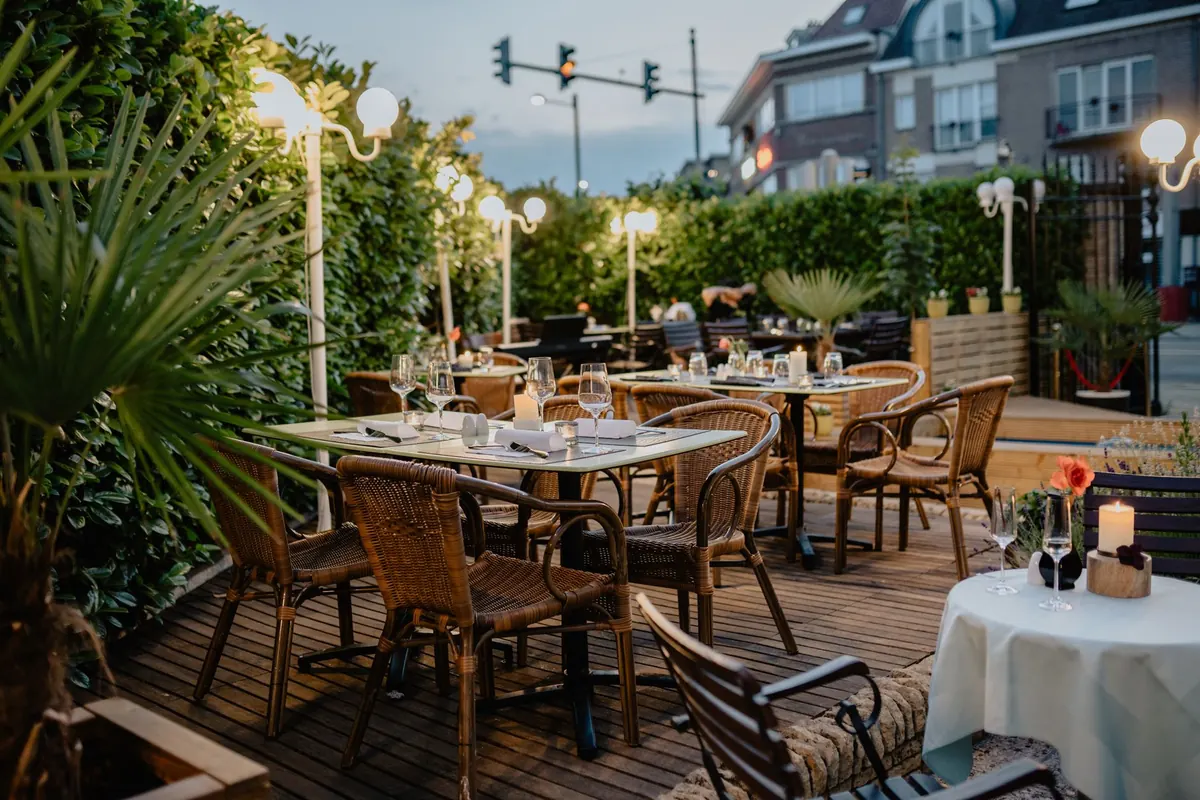
Think about the shape of the table, too. A small round table for two keeps the view shared. A long table set parallel to the horizon means one half of your group has their back to the light all evening. If you are a larger party, ask to be placed on the sunset-facing side rather than accepting whatever is free first. And check what is overhead: a pergola, an awning or a large umbrella looks charming at 6pm and blocks the exact strip of sky you came for at 8pm.
If the terrace is already full when you arrive, ask how long the wait is and whether anything is likely to open up in the next twenty minutes. Staff usually know which tables are finishing their coffee. Waiting with a drink in hand at the bar is a far better use of the hour than giving up and walking to a second-choice spot.
Golden Hour, Sunset, Blue Hour: Three Different Lights
Golden hour
This is the warm, flattering stretch before the sun goes down, when faces look good, stone glows and long shadows give the scene some shape. In summer at higher latitudes it can run well over an hour; closer to the equator it is shorter and steeper. It is the best window for portraits and for photographs of the terrace itself, with the sky still bright enough to hold detail.
Sunset
The drop is brief and, honestly, slightly overrated as a photograph. What makes it worth securing a seat for is the quality of the light in the ten minutes around it, when the sky shifts from gold to orange to a brief pink. Watch it with your eyes first. Take three pictures, not thirty.
Blue hour
The twenty to thirty minutes after sunset are cooler, softer and much easier to photograph badly. City lights appear, windows glow, and the sky turns a deep, even blue that photographs beautifully against warm interior lighting. A steady surface — a wall, a railing, a table — will do more for your pictures than any filter. This is also when the terrace is at its most relaxed, and when you can finally hear each other talk.
If you only remember one thing: arrive early for the seat, stay late for the light.
Adjusting the Plan for Season, Weather and Crowds
High summer
Sunsets arrive late, which tempts people into an evening-long meal that ends just as the light peaks. Book if you can, and treat the ninety minutes as a minimum rather than a target. On holiday weekends, add another quarter of an hour.
Winter and the shoulder months
The sun goes early, blue hour is short, and the temperature can fall sharply the moment it is gone. Bring a layer you can put on without leaving the table, and expect to be heading home before nine. A clear cold evening often gives the sharpest colours of the year.
Cloud, haze and wind
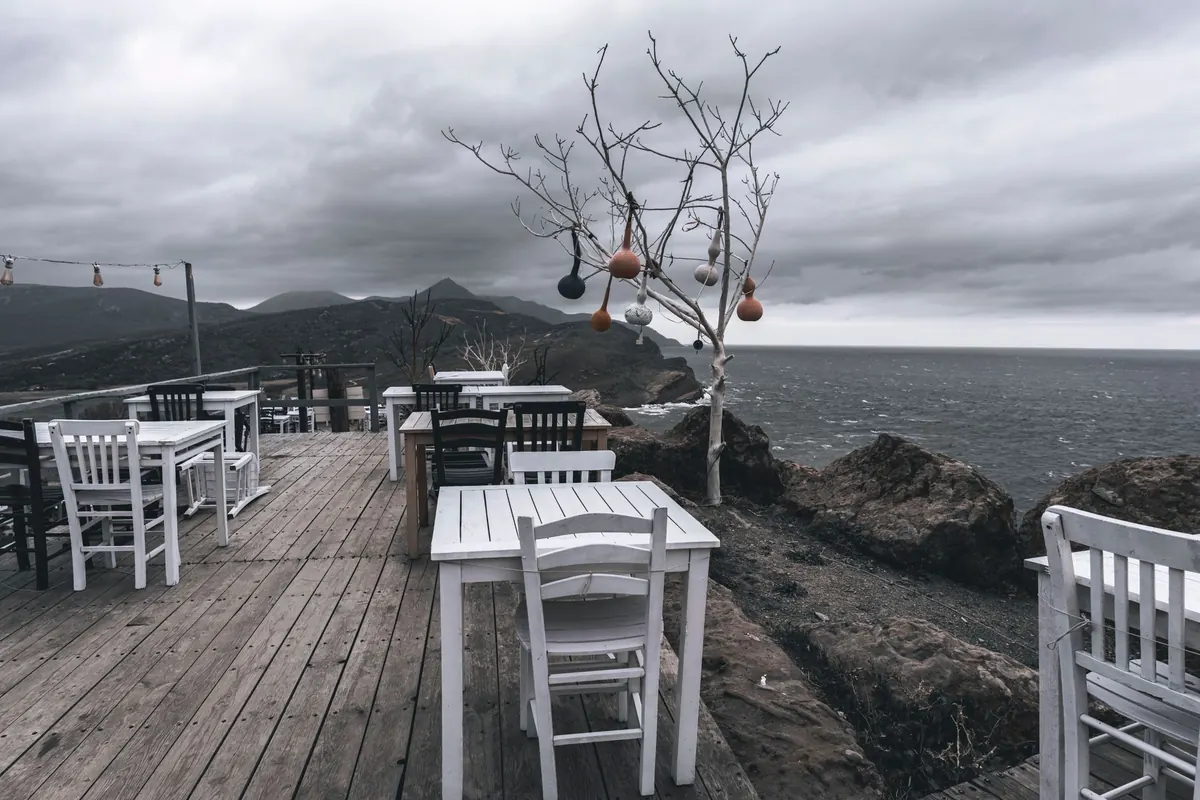
A completely clear sky is lovely; a sky with some broken cloud is usually better, because the undersides catch the colour. Flat grey overcast will not turn gold, so lower your expectations or save the trip for another night. Wind matters more than people think: an exposed terrace can be uncomfortable for ninety minutes, and a sheltered one a few streets inland can be the better call.
Direction
The sun does not set in the same place all year. It swings north of west in summer and south of west in winter, which means the ideal seat in June is often not the ideal seat in October. If the view is the whole point of the booking, mention the season when you reserve and let the staff place you.
A Five-Minute Check Before You Leave
- Confirm sunset time for today, for this specific location. It shifts by a minute or two a day, which is enough to matter in a tight plan.
- Check opening hours and whether last entry is earlier than you assume.
- Know your route and your way home; taxis are hardest to find in the half hour after sunset.
- Pack sunglasses, a light layer, and something to tie long hair back.
- Charge your phone before you go, and decide in advance how much of the evening you want to spend behind it.
- Plan the exit: leave ten minutes before the crowd does, or stay an extra half hour and have the terrace almost to yourself.
Ninety minutes is not a long time. It is simply enough time — for the table you actually want, the drink you are not gulping, the gold light, the drop and the quiet blue that follows it. Plan the arrival and the rest of the evening looks after itself.
Photo: Zafer Erdoğan / Pexels