How to Choose a Sunset Terrace: 7 Factors That Matter More Than the View
A terrace can photograph beautifully and still be the wrong place to spend an evening. The view you see online is one frame, taken at the best moment, from the best corner, usually by someone standing up. What you actually get is a chair, a table, a breeze, a waiter carrying a full tray, and forty minutes of light that either works for you or doesn't. Choosing well means comparing the things that hold up after the first photograph: the sightline from your seat, the direction the sun sets, how the wind behaves at eight in the evening, and whether you can reach the table without a struggle. Here are the seven factors worth checking before you book.
Start With the Sightline, Not the View
The view is what's out there. The sightline is what sits between your eyes and it. These are rarely the same thing, and the gap is where most disappointing evenings begin.
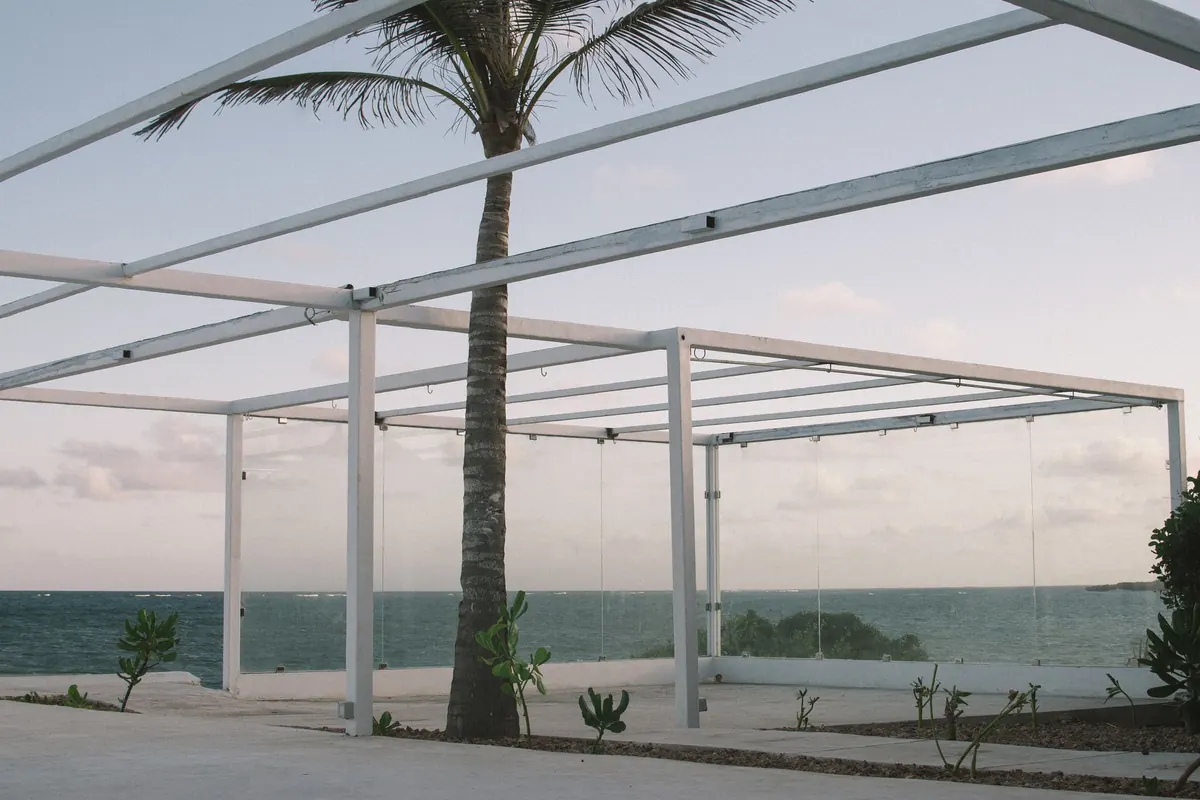
A rooftop can face the sea and still give you, from a seated position, a solid parapet, a row of planters, the back of a pergola beam and the tops of other people's heads. Glass balustrades look invisible in photographs; in reality they collect fingerprints, haze over in salt air, and can be just high enough to cut the horizon in half when you're sitting down.
So look for evidence taken from table height rather than standing height. Guest photos are more honest than the official ones. Failing that, ask directly: if I'm at a table for two, can I see the horizon without standing? It's a normal question and staff generally answer it straight. Also ask whether the terrace steps down in levels, because a table two rows back on a raised tier often has a cleaner line to the sky than a front-row seat behind a planter.
Check Where the Sun Actually Sets
Sunset does not happen in one fixed spot. Through the year the sun sets at different points along the horizon, so a terrace that frames a perfect drop into the sea in June may be looking at the wrong slice of sky by October. Two terraces three hundred metres apart can also lose the sun twenty minutes apart, because a ridge, a cliff or a line of buildings gets in the way long before the official sunset time.
This is why "west-facing" is only a starting point. What you want to know is the gap between sunset and the moment the sun disappears behind something. Ask the staff what time the sun leaves the terrace in the month you're visiting, and listen for a specific answer. If nobody knows, check a sun-position app against a map of the skyline, or find a photo of the terrace taken in the same season and look at where the light is coming from.
If the sun vanishes behind a hill at 8:05 and you booked for 8:15, you've bought the afterglow, not the sunset. That can still be lovely — just know which one you're paying for.
Wind Exposure Decides How Long You Stay
Wind is the quiet deal-breaker. A beautiful terrace with an onshore breeze in the late afternoon can turn a two-hour dinner into a forty-minute one, and no amount of scenery compensates for a napkin that won't stay on the table.
Seafront terraces usually catch the afternoon breeze; rooftop terraces between buildings can funnel it in ways that are hard to predict from the street. Look at the photos again and read the furniture: glass side screens, heavy weighted bases, dense planters, blankets folded over chair backs. Those are signs of a terrace that knows its weather, which is reassuring, but they also tell you something about the site.
When you book, ask which side is sheltered. Then take that table even if it's a metre further from the railing. A light layer you can put on after the sun drops is worth more than a carefully planned outfit.
Apply the Two-Hour Test to the Seating
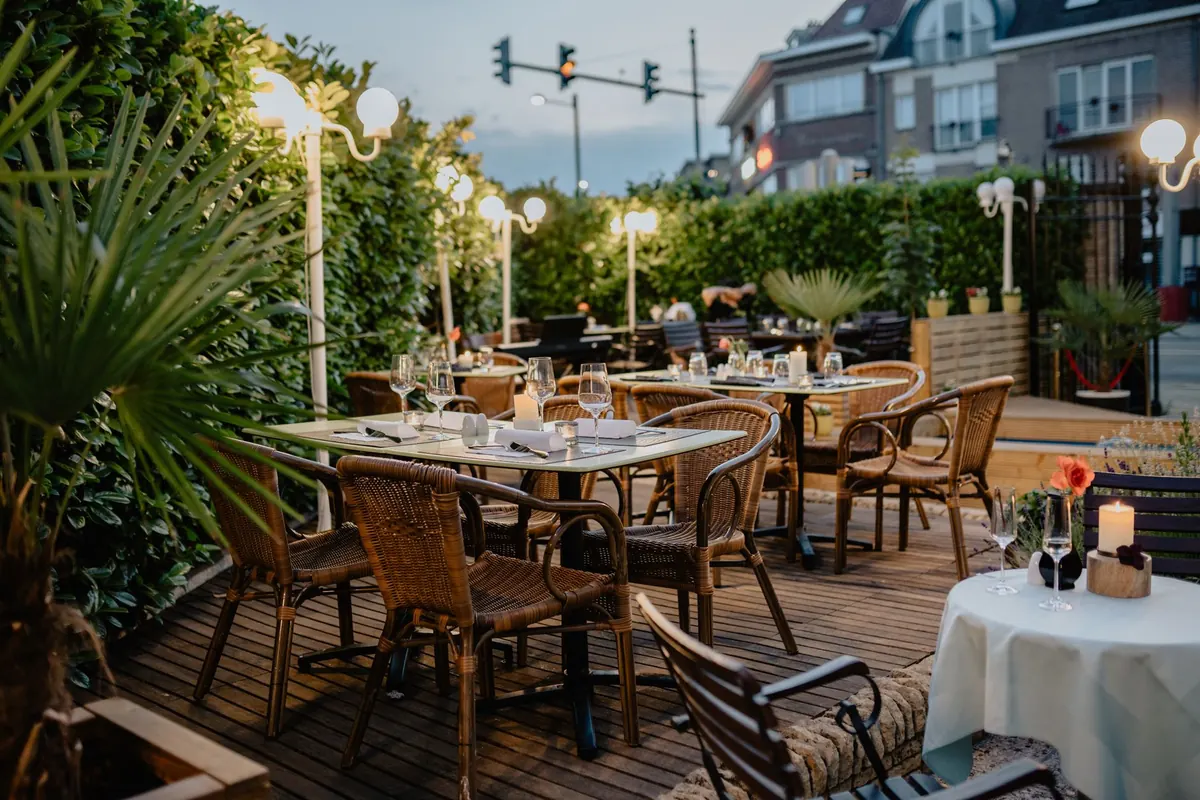
Picture yourself in the chair for two hours, not two minutes. Backless benches, slim wrought-iron bistro chairs and low lounge sofas that leave you holding your glass at chest height all look better in photographs than they feel after the second course.
Table size matters too. A narrow table for two has to hold two plates, water, a bottle, glasses, a phone and a camera, and something will end up on someone's lap. If you're booking for a group, ask whether the long table is one table or several pushed together with a gap in the middle.
Then consider glare. A west-facing terrace in the last hour before sunset puts low, direct light straight into your eyes. A solid awning solves the glare and blocks the view; a slatted screen or a movable umbrella solves both. Ask which tables sit under shade and which are fully open, and choose according to whether you want to watch the sun or squint at it.
Crowd Levels at the Sunset Hour
The same terrace can feel like two different places at six and at eight. Capacity is the number to ask about, and specifically how much of it is seated. A venue with thirty tables and a standing area by the railing behaves very differently from one that lets eighty people in for the sunset with nowhere to sit.
These are the questions worth putting in a message before you reserve:
- How many seats are there, and is there a separate standing area near the railing?
- Do you take reservations for the sunset hour, and is there a time limit on the table?
- Are tables assigned, or is it first come? Can I request a specific spot?
- Is there a minimum spend for the front row?
- Is the terrace open to non-guests, and is that different at weekends?
- Is there live music, and how loud does it get?
Midweek visits are calmer almost everywhere. If you can only come on a Saturday, book earlier than you think you need to and accept a second-row table — it's usually quieter, warmer, and the view is often no worse.
Accessibility, Including the Walk Back
Step-free access needs more than a yes or no. Ask whether the lift reaches the terrace itself or stops a floor below, whether there are steps between the lift and the tables, and whether the bathroom is on the same level. "There's a lift" and "you can get a wheelchair to a table" are different claims, and only one of them is useful.
The same applies to arrival. How far is the taxi drop-off? Is the last stretch cobbled, steep, or up a narrow alley? Is there anywhere to park? If anyone in your party has difficulty walking, ask to be seated near the entrance rather than at the far end.
And plan the way down as well as the way up. Stairs that were obvious in daylight are not always lit after dark, and phone torches are a poor substitute for a handrail. If rain is forecast, ask whether there is covered seating or an indoor fallback; an outdoor booking is weather-dependent by definition, so it's worth knowing the cancellation policy before you commit.
Timing: When to Arrive and What Happens Afterwards
Arriving about an hour before sunset gives you time to order, settle, and watch the light change instead of arriving into the middle of it. It also puts you ahead of the rush for the rail.
Don't leave immediately after the sun drops. The twenty or thirty minutes that follow often carry the richest colour of the evening, and the terrace usually thins out as people take their photographs and go. That's frequently the best part of the whole experience.
Finally, check the season against your plans. In summer the sun sets late, so sunset collides with dinner and you'll want to know whether the kitchen is still serving when the light goes. In winter it sets early and the temperature drops fast once it does, so ask about blankets and heaters. And confirm the closing time, because a terrace that shuts ten minutes after sunset is a different proposition from one that stays open for another two hours.
A Short Checklist Before You Reserve
- Find one guest photo taken from a seated position, and check the sightline over the parapet, planters and railings.
- Look up the sunset time for your date, then ask when the sun actually leaves the terrace.
- Ask which side is sheltered from the wind, and book that side.
- Ask whether tables are assigned and whether the front row carries a minimum spend.
- Confirm step-free access to the table in detail if you need it, including the bathroom and the entrance.
- Ask what happens after sunset: last orders, closing time, music.
- Check the weather and cancellation policy, since outdoor seating is always at the mercy of the sky.
Most of this takes two messages and five minutes of looking at other people's photographs. Do it once and you'll stop choosing terraces by the picture and start choosing them by the evening — which is the part you actually came for.
Photo: Mwabonje Ringa / Pexels